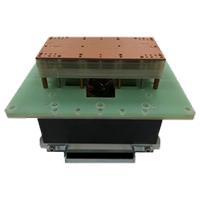
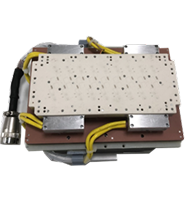
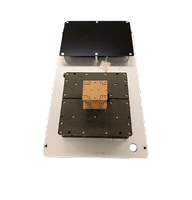
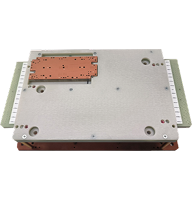
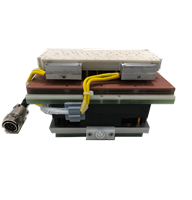
Electrical testing fixture for printed wiring boards
-Achieving High-Precision Small-Diameter Pins and Total Jig Cost Reduction through Unique Ideas-
Open/Short Inspection of Printed Wiring Board Patterns
2-terminal testing / 4-terminal testing
Scheduled for release in 2027 (under development)
Hybrid effect
“Increase the pin diameter” and “reduce the pitch between pins”
Among the smallest in the industry
Pin-to-pin pitch: 25 μm
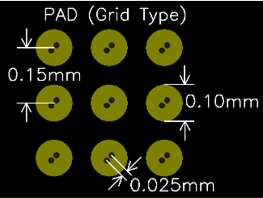
・Supports inspection of 0.10 mm diameter pads (4-terminal)
* PAD (Grid arrangement) pitch: 0.15 mm
We are a manufacturing subsidiary based in Vietnam, wholly owned by Inoue Shoji Co., Ltd. (Japan).
Although “Shoji” (meaning “trading company”) is part of its name, Inoue Shoji Co., Ltd. is not a trading company; it is a manufacturer of electrical testing jigs for printed circuit boards.
The company has a long-standing track record of extensive business dealings with major Japanese printed circuit board manufacturers.
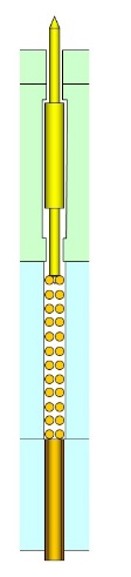
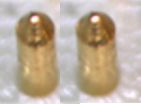
Fine-pitch compatible spring-loaded pin fixture / Eccentric pin
Minimum pitch 25 μm
Minimum pin diameter 50μmφ
Compared to standard pins with conical tips, the “eccentric pin” we developed allows for a smaller minimum pitch between pins, even when the pin diameter remains the same.
Pin
Wiring Electrode
Pin-spring jig
Standard pin
Pitch ≒ Pin diameter + Hole wall thickness
Eccentric pin
Pitch ≒ Hole wall
Eccentric pin
Value Engineering
Minimum pin diameter 50μmφ
Measures to Prevent Bent or Broken Pins
Market standard
alternative
* Features a floating protective plate structure.
Furthermore, “eccentric pins” can solve the problem where small-diameter pins are prone to breaking or bending when used on inspection boards featuring via-induced surface irregularities on the pads.
“Reduce the pitch between pins”
Stability of the pass rate (normal inspection rate)
PCB Design
Furthermore, “eccentric pins” can solve the problem where small-diameter pins are prone to breaking or bending when used on inspection boards featuring via-induced surface irregularities on the pads.

① Separate the pin unit.

② Replace only the faulty pin (No need to remove the pin cover board) Same replacement method as wire probe pins
Manufactured in Vietnam
We design and manufacture electrical inspection jigs in Vietnam.
This allows us to respond quickly to urgent requests, such as:
・Troubleshooting (root cause analysis and implementation of interim/permanent measures)
・Repair of malfunctions or damage
・Short-lead-time orders and startup support immediately after delivery
・Consultations and meetings
・Modifications due to specification changes
・Rapid jig alterations and modifications
Cost Down
10~20%
Eco-Friendly
Returning jigs that are no longer needed allows us to reuse their component parts.
This recycling process can reduce jig costs by 10–20%.
Significant benefits are realized particularly with the following types of jigs:
1. Jigs for printed circuit board prototyping (for low-volume testing)
2. Jigs requiring remanufacture or modification due to changes in the printed circuit board design
Jigs featuring a pin-and-spring structure offer particularly substantial cost-saving potential, as the pins and springs—which account for the majority of the cost—can be recycled (unlike wire probes, which cannot be reused).
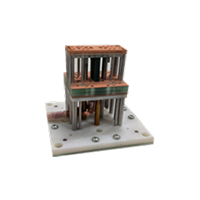
We have collaborated with a material manufacturer to develop a proprietary FR4 material—a type of material typically considered difficult to process—while keeping costs low.
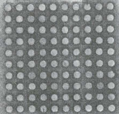
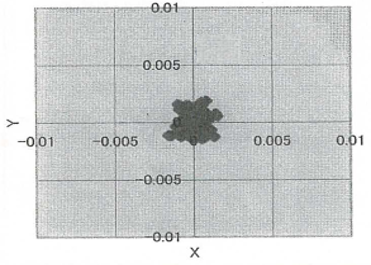
Evaluations using small-diameter drills for NC machining have demonstrated a hole position accuracy of ±5 μm or better. By applying these specific NC machining conditions during production, we ensure consistent quality.
Board material: Special FR4 (proprietary specification)
Processing conditions: Standard
Processing diameter: 0.05φ
Number of processing: 100
Processing time: 3 minutes
In NC machining tests, we have achieved hole position accuracy of ±3 μm or better by employing a special machining method.
Board material: Special FR4 (proprietary specification)
Processing conditions: special
Processing diameter: 0.05φ
Number of processing: 100
Processing time: 3 minutes
Quality Control
"Understanding," not "memorizing"
We have a proven track record of successfully passing all quality audits conducted by major PCB manufacturers.
In addition to meeting ISO 9001 requirements, we implement the following measures:
・4M change management
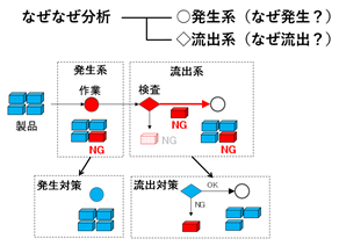
・”5 Whys” analysis (iterative analysis covering both occurrence and escape points)
・Chemical substance management (RoHS and lead-free compliance)
・Quality control tiering (enhanced management based on the severity of defect risk)
・Strict adherence to process checklists (one check per task)
・FTA / FMEA (DFMEA/PFMEA) / APQP (5-phase approach) management
We also evaluate NC machining precision using 3σ metrics and Process Capability Index (Cpk) values. By feeding these results back into the design process, we strive to optimize our quality control and quality assurance systems.